sustainability risk management (SRM)

What is sustainability risk management (SRM)?
Sustainability risk management (SRM) is a business strategy that aligns profit goals with a company's environmental, social and governance (ESG) policies. The goal of SRM is to make this alignment efficient enough to address potential risks and realize opportunities that come with sustainability.
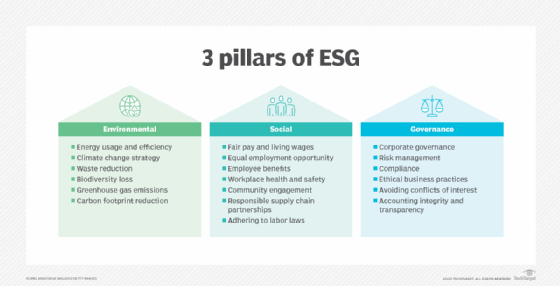
An organization's SRM efforts are often incorporated into its larger enterprise risk management strategy. Under this model, sustainability is no longer seen as just a PR concern but is instead recognized as a strategic priority that considers the three types of ESG risks:
- Environmental. This category includes the organization's overall impact on the environment as well as the potential risks and opportunities it faces because of environmental issues. Examples of environmental risks include inefficient energy consumption, deforestation, biodiversity loss, air and water pollution, failure to adapt to climate change, or the fines and lawsuits that could result from not addressing environmental issues.
- Social. This category generally refers to how the organization treats different groups of people, whether employees, contractors, customers, suppliers, community members or anyone else. Examples of social risks include discriminatory hiring and compensation practices; human rights violations, such as child labor or forced labor; unsafe or unhealthy work environments; unfair treatment of customers or suppliers; or negative impacts on the local community.
- Governance. This category is concerned with how an organization polices itself, what internal controls it has in place, and how effectively it complies with applicable regulations (regulatory compliance) and industry best practices. Examples of governance risks include corruption, tax evasion, unethical business practices, inadequate risk management, antagonistic employee relationships, absence of whistleblower programs or lack of financial transparency.
The risks of ESG issues
The risks that come with ESG-related issues can have legal and financial consequences as well as affect a company's overall reputation. Many organizations are now addressing ESG concerns by strategically incorporating SRM into their long-term business and management policies -- a practice that has become increasingly important as awareness of ESG and sustainability issues continue to grow.
One of the chief drivers for SRM adoption is the increasing number of global and national regulations, which can be especially challenging for international businesses. At the same time, investors, stockholders, employees, customers, clients and other stakeholders are placing greater importance on the role that sustainability plays in choosing a business. They want to know an organization's potential ESG risks before engaging with that organization. Many stakeholders now favor companies that are taking steps to manage these ESG risks more effectively while prioritizing sustainability.
This article is part of
What is risk management and why is it important?
The growing concerns over ESG risks have been fueled in large part by climate change, which is why the SRM efforts at many organizations have focused on the environmental impact of their operations. To this end, they have evaluated each business process individually and then looked for ways to minimize their effect on the environment. Where applicable, the IT department has assisted with this effort by managing data as it relates to the company's sustainability goals as well as providing automated auditing and reporting capabilities.
A broader approach ESG through sustainability risk management framework
Despite the focus on the environment, some organizations adopt a broader approach to sustainability, taking into account the social and governance components along with environmental. This broader interpretation of sustainability got a big boost in 2015 when the United Nations Member States adopted the 2030 Agenda for Sustainable Development.
According to UN documentation, the agenda "provides a shared blueprint for peace and prosperity for people and the planet, now and into the future." At the core of this agenda are the 17 Sustainable Development Goals, which address issues such as poverty, hunger, health, gender equality, climate action, clean water and energy, and responsible consumption and action.
An effective SRM framework can help management identify emerging ESG challenges that could affect the organization's operations, including production, supply chain, health and safety, and other areas of concern. Examples of emerging issues include the availability of renewable energy sources, depletion of non-renewable resources and changing government regulations.
Learn about 18 sustainability management software providers, and explore 10 tips for a successful sustainability journey. See the key role technology plays in sustainability, and check out eight top ESG reporting frameworks explained and compared.