Home > CIO News > Wi-Fi way to shrink digital divide, say big-city CIOs
CIO News:
EMAIL THIS

Wi-Fi way to shrink digital divide, say big-city CIOs

By Shamus McGillicuddy, News Writer
06 Mar 2007 | SearchCIO.com

IT news and analysis for CIOs
Digg This!    StumbleUpon Toolbar StumbleUpon    Bookmark with Delicious Del.icio.us    Add to Google

LOS ANGELES -- When it comes to deploying wireless infrastructure, city CIOs have more than difficult technology puzzles and political battles to solve. They also have to find a way to make their mayors' idealistic policies a reality.

Chris Vein, CIO of San Francisco, said Mayor Gavin Newsom set a goal of citywide free Wi-Fi in order to bridge "the digital divide."

Yeah, sometimes the boss is right. My boss was interested in Wi-Fi so we did some.
Bill Schrier
CTO, Seattle
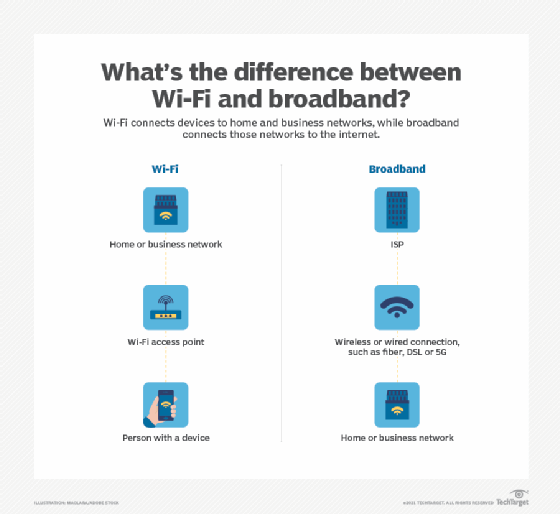
Vein and other big-city CIOs talked about citywide deployment of Wi-Fi during last week's CIO Impacts Forum. Vein said San Francisco has "some of the richest, most powerful people in the country and also some of the poorest. We have an incredible digital divide. We have 200,000 people who do not have access to a computer and who do not have access to broadband."

Vein said Newsom was interested in bringing more than free Wi-Fi to the city. He also wanted all the city's inhabitants to have a baseline ability and means to use the service.

"What good is access to the Internet if you don't have a computer, laptop, Game Boy or something else that you can use it with? And if you are new to the Internet or to searching online, how can you make sense of the zillions of hits you get when you're doing a search."

Vein said the city wanted to help disadvantaged people use the Internet to do things like open bank accounts, look for jobs and find other important information. Newsom also wanted to provide training, education and support.

To go that extra step, the city needed to earn revenue off its Wi-Fi. This meant offering both free and paid services and working in a partnership with a provider.

Vein has a preliminary deal with EarthLink Inc. and its partner, Google Inc., that will bring free Wi-Fi connectivity to the whole city at 300 kilobytes per second. Residents will have the option of paying for a faster service at 1 megabytes per second. Vein said the city will share revenue with EarthLink. The deal is awaiting approval by the city's board of supervisors.

"If all goes well, we should have free and affordable Wi-Fi by June [2008]."

Despite Seattle CTO Bill Schrier's initial skepticism about free municipal Wi-Fi, he acknowledged that it had its upside.

"Yeah, sometimes the boss is right," Schrier said. "My boss was interested in Wi-Fi so we did some."

Schrier piloted a free Wi-Fi program in select areas of Seattle, including Columbia City, "a small business district that was economically challenged but emerging," the University of Washington, city parks and town hall.

Schrier said Seattle Mayor Greg Nickels' goal was first to improve the economic vitality of the city and to provide connectivity to the highly mobile employees of his city's many small businesses. And finally, the mayor wanted to increase the mixed use of parks, which at certain types of year were heavily inhabited by the city's homeless, which in turn discouraged other people from using them. The hope was that by bringing Wi-Fi to the parks, more people would use them.

Although the Seattle pilot program was a success, Seattle won't go citywide, Schrier said. A city-commissioned study determined a citywide fiber network would be better for the city. However, the existing Wi-Fi spots will stay. About 25% of businesses in Wi-Fi areas said they had seen an increase of revenue due to the connectivity. And 90% of businesses surveyed said they wanted the Wi-Fi to stay.

"And with an extensive fiber network we can pop up Wi-Fi anywhere," Schrier said.

Hardik Bhatt, CIO of Chicago, said his city had similar goals to San Francisco, especially the goal of closing the digital divide.

"There is this fabulous downtown, then there are huge pockets of areas where people haven't even seen a computer, or they have seen it, but they see computers as an object and they don't think they can use it," Bhatt said. "At the same time there are industrial areas. Pockets where they don't have high-speed access. The only thing they can rely on is dial-up."

Bhatt said Chicago's goal was to bring affordable Wi-Fi to the whole city, with free Wi-Fi in select areas, such as schools and libraries. The city also wanted to offer affordable computers and software to the poor. He said Mayor Richard M. Daley's goal was also to help change the mindset of some of the city's youth. By giving them access to technology and information on the Internet, the hope was to open urban youth to new career aspirations.

Bhatt said Chicago was also very much concerned with economic development. "They say cities don't go out of business, but they do go out of business if they don't keep reinventing themselves. We've seen cities in the U.S. that have had a downward [population] trend. ..."

Bhatt said seamless, citywide Wi-Fi was a key to helping economic growth.

Bhatt said the city decided on a public-private partnership to achieve these goals. His department put out a request for proposal in 2006 and received three responses, which are currently being evaluated. Bhatt said he plans to make a recommendation on a partner in a few months.

More on CIOs, Wi-Fi
Philadelphia -- the city that loves wireless

State of the public CIO
On the technical side, there are also plenty of lessons to be learned.

Schrier said cities should carefully choose reliable technology. "We did not choose the leading vendor for Wi-Fi [hardware] … and we should have. We chose another vendor and actually helped them beta test their equipment; that took them and us six months in production."

Schrier also learned that you can't backhaul your Wi-Fi network to your Internet service provider inexpensively. "As it ended up, we had to use our own fiber network to do most of the backhaul because it otherwise added one more piece of uncertainty."

Schrier said there is more to just providing a free service. With that service comes expectations for connectivity.

"We never realized how many versions of Microsoft and Mac operating systems were out there and other connectivity issues," he said.

There was more demand for help and support than anticipated, he said.

Schrier also learned that gamesters and spammers would also become a problem once free Wi-Fi was available. Spammers were eating up bandwidth with their abuse. But players of interactive online games were also demanding more pipe. Schrier said he had to throttle down connectivity to discourage these bandwidth hogs.

Let us know what you think about the story; email: Shamus McGillicuddy, News Writer


Tags: Mobile technology and managementLAN and wireless LAN managementGovernment industryVIEW ALL TAGS

Digg This!    StumbleUpon Toolbar StumbleUpon    Bookmark with Delicious Del.icio.us    Add to Google


RELATED CONTENT
Mobile technology and management
Sidekick data and 'balloon boy'
Software and services guides for CIOs
Mobile data protection options for enterprise CIOs
E-waste: A blight on the environment and a company's good name
Videoconferencing equipment, software can help firms cut costs
Mobile device management guide: Keeping IT on the run
HD videoconferencing a way of life for some VIPs
VoIP security and converged networks: A Special Report for CIOs
VoIP savings seen in productivity and long-distance charges
Wireless investments key to future success

LAN and wireless LAN management
Evaluating network access control: NAC policy enforcement matters
Network access control: A hybrid approach
IT telephony, VoIP deployment staffing solutions for CIOs
Top five IT/Business Strategies tips of 2007
Wireless investments key to future success
New monitoring technology helps university find mobile users
Mitigate mobile security threats
Security flaw could ground Wi-Fi users
Mobile workers push for smartphones
Tool offers better wireless security for laptop users

Government industry
Miscues abounded in Boston email retention policy, practices
Healthcare IT standards still not clear
Security standards to help manage compliance for those federal funds
California appoints first cabinet-level state CIO, raises bar on IT
DoD takes cue from U.S. businesses, blocks YouTube, MySpace
Vertical market guide for CIOs
Lawson pitches SOA for the midmarket
'Sandal and ponytail set' cramping Linux adoption?
Poor government security makes industry wary
Wisconsin CIO gets slammed on Oracle email debacle

RELATED RESOURCES
2020software.com, trial software downloads for accounting software, ERP software, CRM software and business software systems
Search Bitpipe.com for the latest white papers and business webcasts
Whatis.com, the online computer dictionary


CIO solution center has news, research, and guides to assist the unique challenges of the CIO
About Us  |  Contact Us  |  For Advertisers  |  For Business Partners  |  Site Index  |  RSS
SEARCH 
TechTarget provides technology professionals with the information they need to perform their jobs - from developing strategy, to making cost-effective purchase decisions and managing their organizations' technology projects - with its network of technology-specific websites, events and online magazines.

TechTarget Corporate Web Site  |  Media Kits  |  Site Map


All Rights Reserved, Copyright 2007 - 2009, TechTarget | Read our Privacy Policy
  TechTarget - The IT Media ROI Experts